

Prerequisites
- The specification is saved. A brand new, unsaved specification cannot generate a collection yet; the button explains that.
- The specification has at least one path. A document with an empty
pathscannot produce a collection, and the button says so before you click. - The specification has no blocking issues. See Issues & Governance for which severities block.
- Your role can create and update items in the project. A viewer sees the buttons disabled with the reason.
Generate a collection
1
Open the specification
Switch the API Client sidebar to API Design and open the specification from the Specs section.
2
Start Generate Collection
In the editor toolbar, click Generate Collection. If the specification already has collections linked to it, the toolbar shows a Collections button instead: open it and click + Generate Collection inside.You can also start from the sidebar: open the specification’s three-dot menu and choose Generate collection.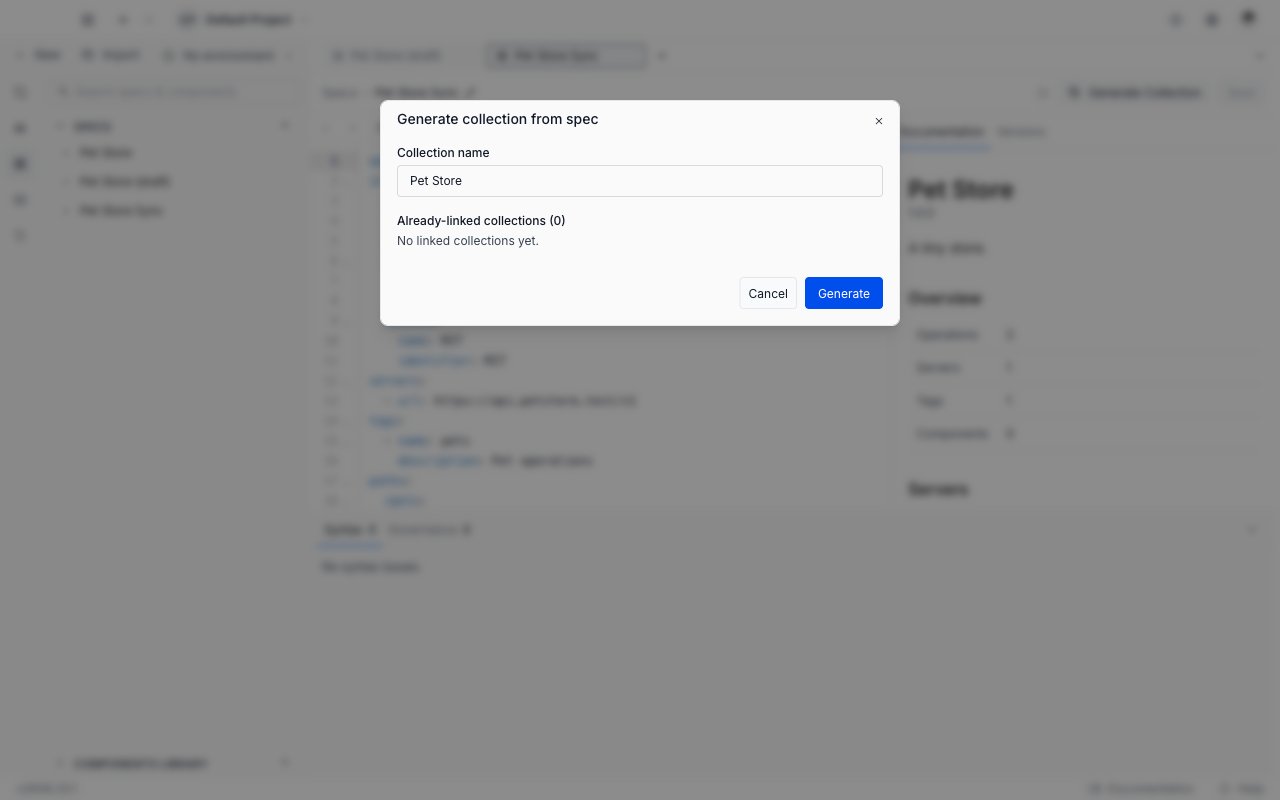
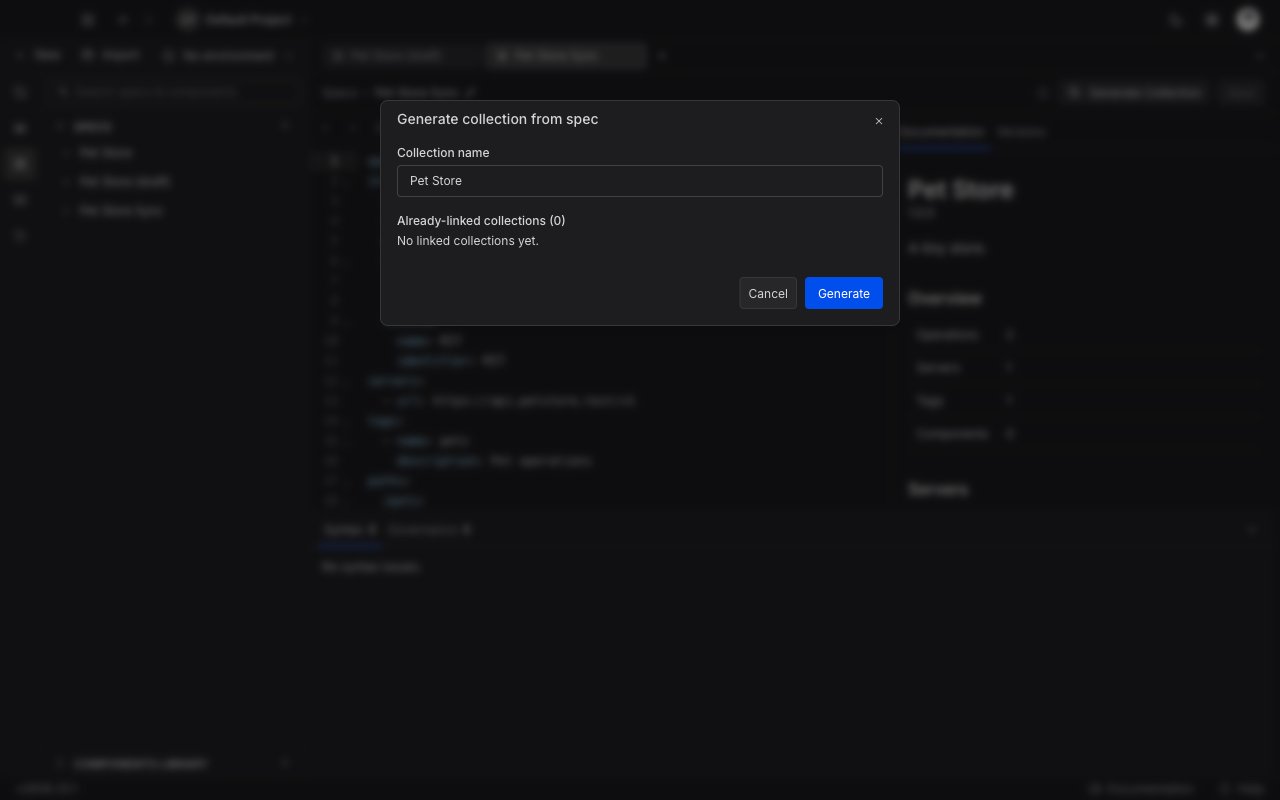
3
Name the collection and generate
Type a name and click Generate. The dialog also lists any collections already linked to this specification, so you can tell whether you are about to create a duplicate.
4
Check the result
A new top-level collection appears in the sidebar. Folders come from your URL path segments, and each operation becomes one request with its method, URL, headers, query parameters, path variables, body and content type already filled in.
Generate always creates a new top-level collection. There is no way to point it at a collection you already have, and generated collections are always top level rather than nested inside another collection.
Keep a linked collection up to date
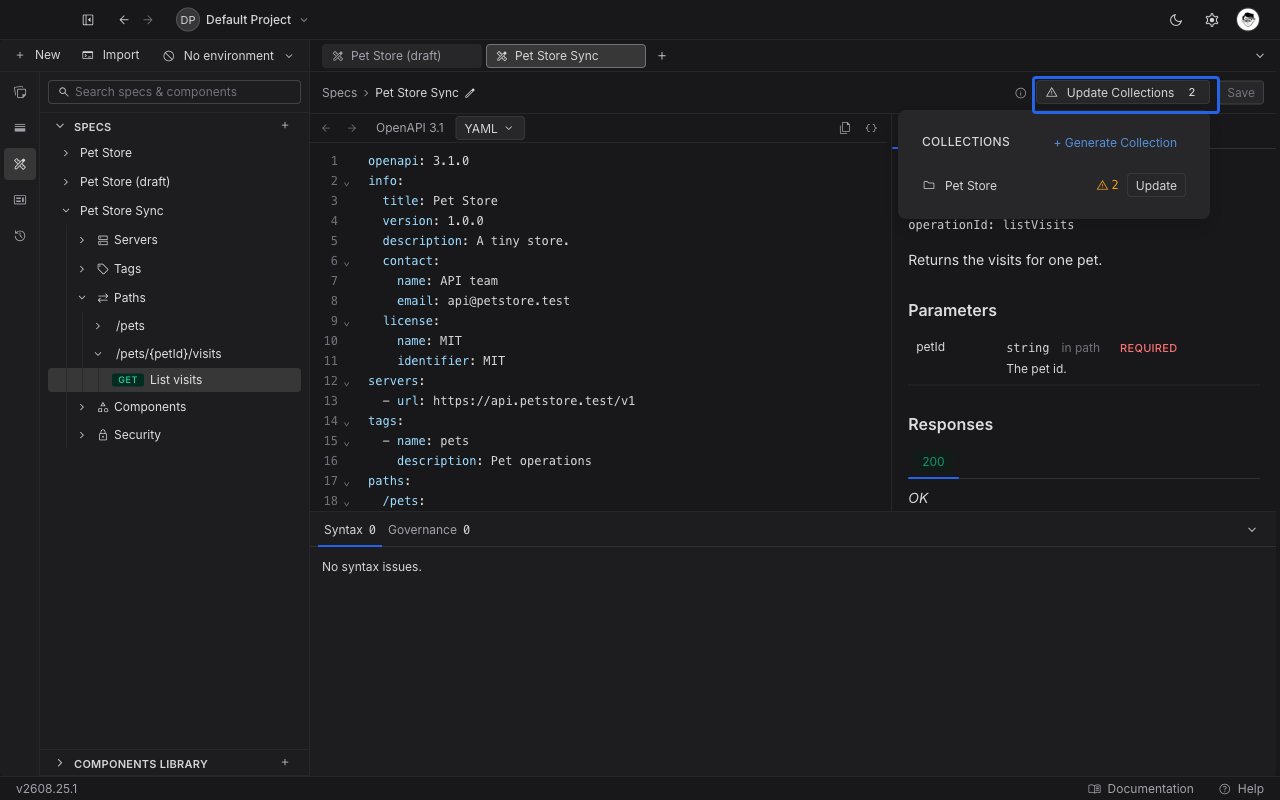
Once a collection is linked, Requestly watches the specification and works out what has drifted. You do not have to ask it to check. When something has drifted, the toolbar button changes: it reads Update Collections with a count of pending changes and picks up a warning icon. Open it to see one row per linked collection.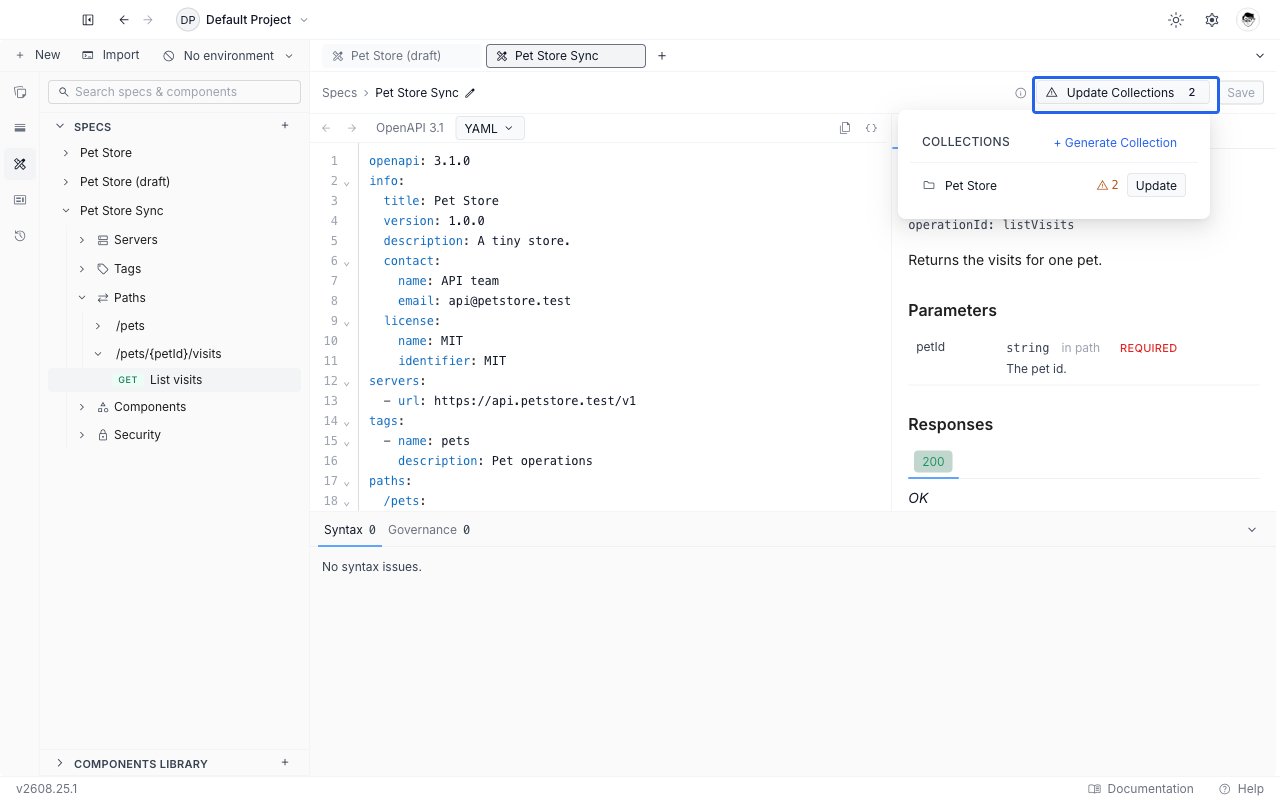
1
Open the Collections popover
Click Update Collections in the spec editor toolbar.
2
Click Update on the collection you want
Requestly opens a preview of exactly what would change in that one collection. Nothing has been written yet.
3
Read the preview
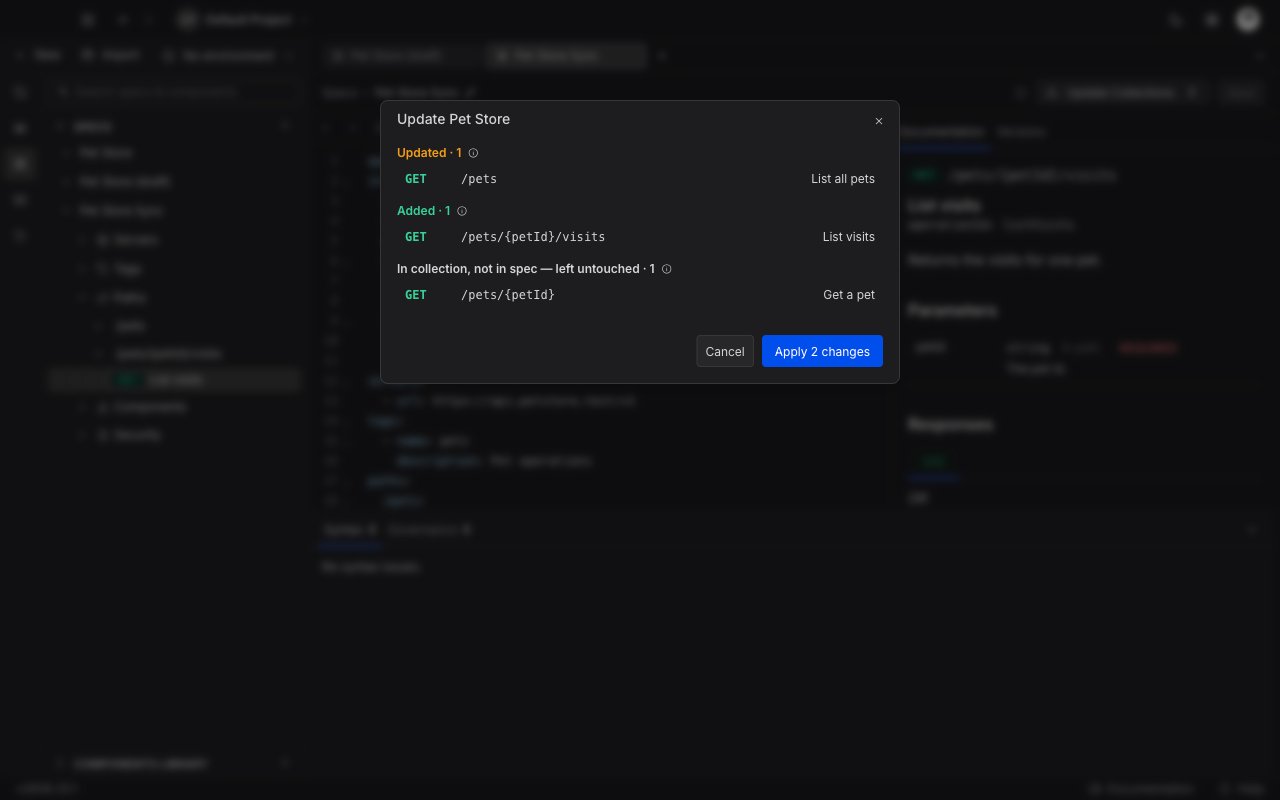
Changes are grouped by kind, and each group has an info icon explaining what happens to your own edits. See What the preview tells you.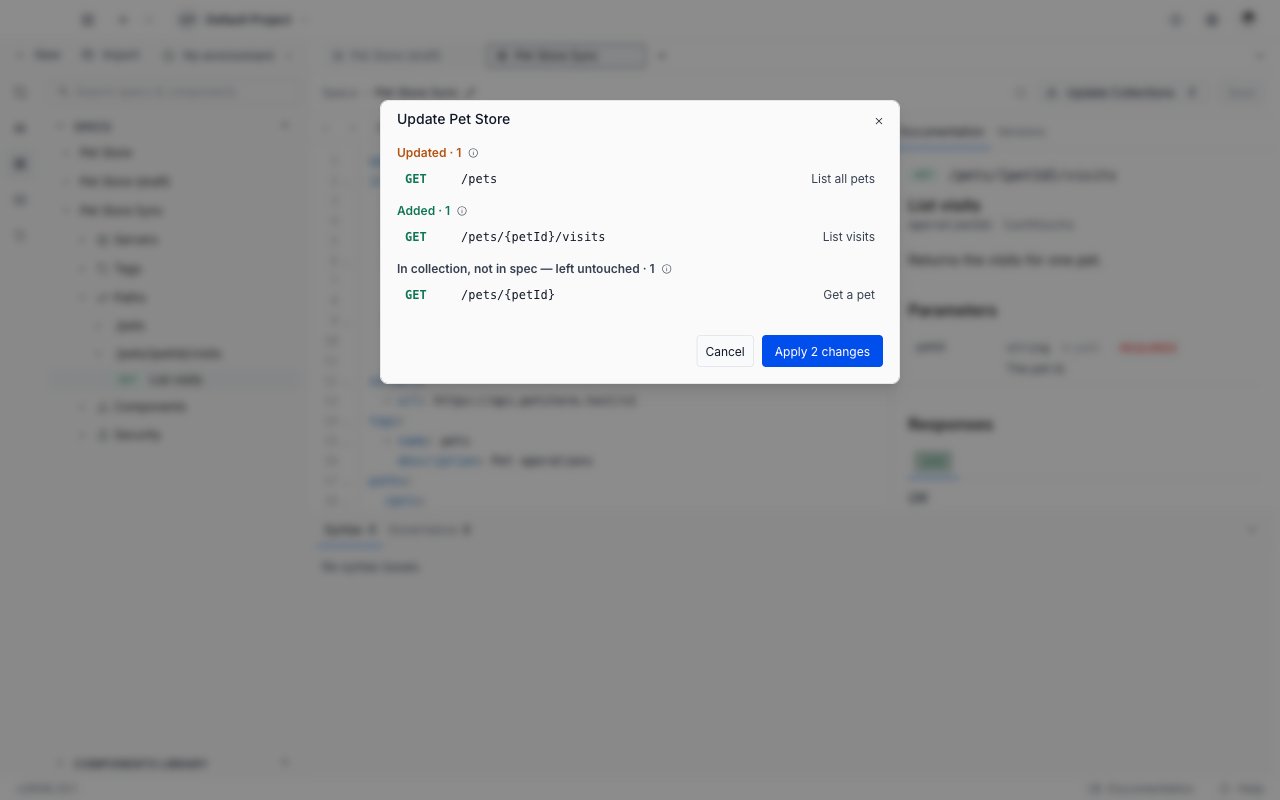
4
Apply
Click Apply n changes. Everything actionable in the preview is applied together; there is no per-row opt out. Requestly confirms how many changes landed.
After a successful apply, the toolbar button drops back to Collections with no count. That is how you know the collection matches the specification.
What Update Collections tracks
Update applies content changes as well as structural ones, so an edit to a request body or a query parameter in the spec does reach the collection. Tracked:- Operations added or renamed, by method and path
- Operations moved between folders
- An operation’s summary or description
- Request headers, query parameters, path variables, body and content type
- Folder renames, and folder descriptions taken from your OpenAPI tags
- The linked collection’s own description, taken from the specification’s top-level description
What the preview tells you
The preview is grouped so you can see the risk before you accept it. Each group’s info icon states what survives.
The last row is the one worth reading twice. Requests that exist in the collection but not in the specification are never deleted by Apply. They are listed so you know they are there, they are not counted in the change total, and you have to remove them yourself if you do not want them.
A request lands in that group for one of two reasons: it really was removed from the specification, or it cannot be expressed in one. Two requests that share the same path and method, such as two query-string variants of the same endpoint, collapse to a single operation, so one of them will always show up here.
When the specification cannot be synced
- Errors in the specification. The Update and Generate buttons are disabled and hovering one names how many errors are in the way. Open the Issues panel to see them, checking both the Syntax and Governance tabs.
- The check has not finished. Immediately after a large edit the buttons stay disabled until the check completes, and hovering one says validation is still in progress. The labels themselves do not change.
- Unsupported features. If your specification uses something the collection format cannot represent, the Collections popover lists it under an “unsupported features” note. The rest of the specification still generates and updates normally.
- The specification was deleted while the preview was open. Apply stops and tells you to reopen the specification.
Next steps
- Issues & Governance to clear whatever is blocking a sync.
- Versions and releases to pin a snapshot of the specification for downstream consumers.
- API Design overview for how specifications, components and collections fit together.