

Design a specification or build a collection?
Both describe the same API. They are good at different things.
You are not choosing once. A specification can generate a collection you then send requests from, and a collection can be exported as an OpenAPI file. See sync a collection from a specification for the link between the two, and import an OpenAPI spec to bring an existing file in as either one.
What a specification is here
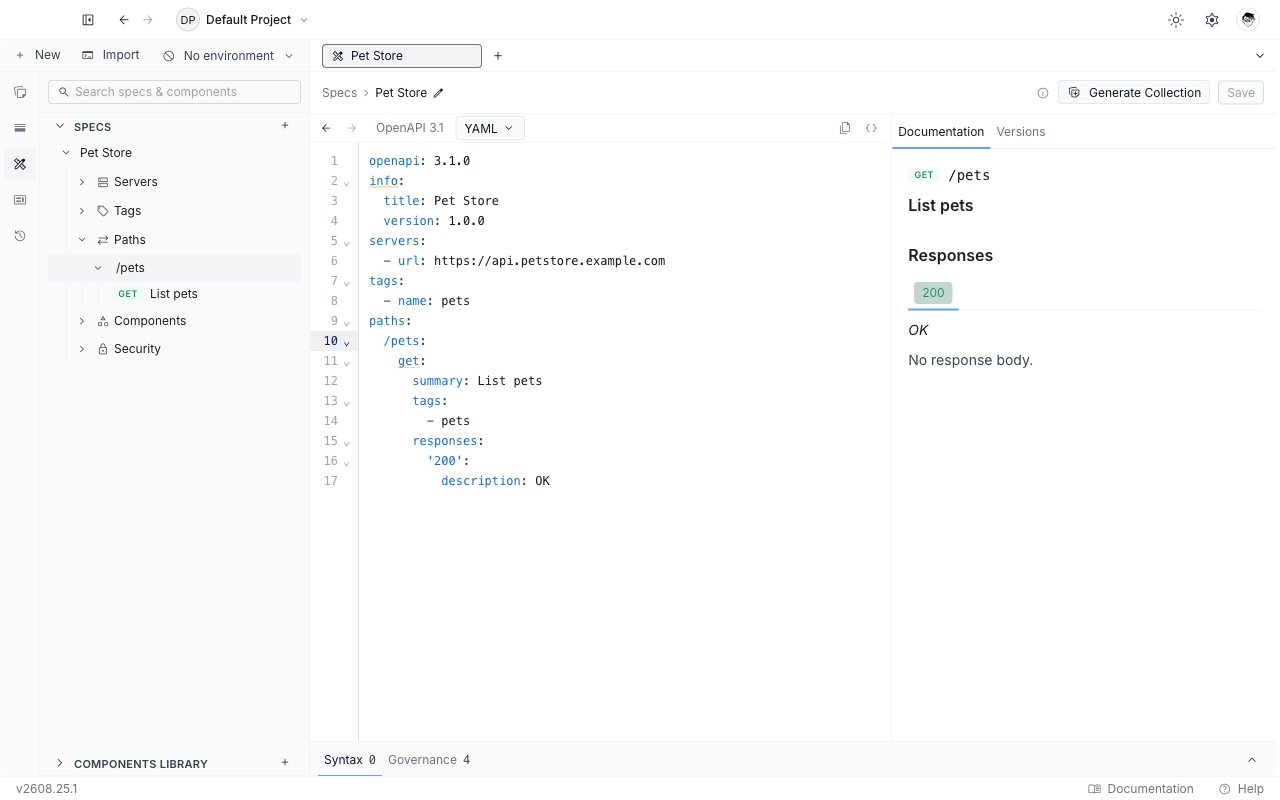
A specification is an OpenAPI 3.x document you edit as text, in YAML or JSON, with the editor helping you as you type: completion for OpenAPI keys, an outline of the document in the sidebar, a live documentation preview beside it, and problems flagged inline as you introduce them. You can author OpenAPI 3.1 (the default) and OpenAPI 3.0. Swagger 2.0 files can be imported, but only as a collection: they cannot be edited as a specification. There is no AsyncAPI authoring.Requestly stores the standard document and nothing else. There are no Requestly-only keys added to your file, so what you export is what you wrote.
How specifications sit in a project
Everything under API Design is scoped to one project.- Specs are the documents themselves. A project can hold as many as you like.
- The Components Library is a single shared library per project. Every specification in the project can reference the same schema, parameter, or response instead of repeating it. See the Component Library.
specs/, library entries under components/<category>/, plus the project’s .requestly/ folder, which holds a metadata file for each of them. Commit .requestly/ as well: a specification or component whose metadata file is missing does not load and is not reported as broken, so a teammate who clones without it sees nothing. In a team project they sync like the rest of your project, and your role applies. On a read-only role you can open and read every specification and component, but Save, rename, and delete are disabled with the reason on hover.
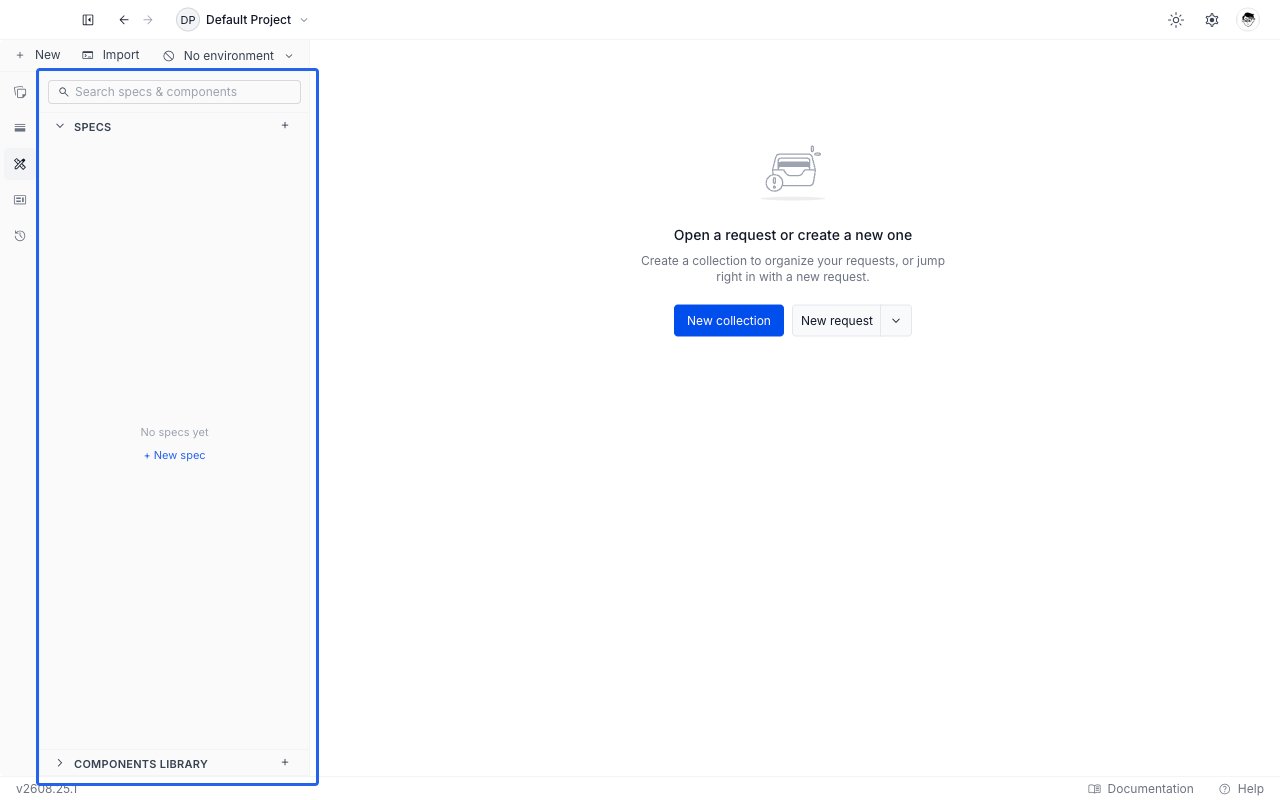
The sidebar
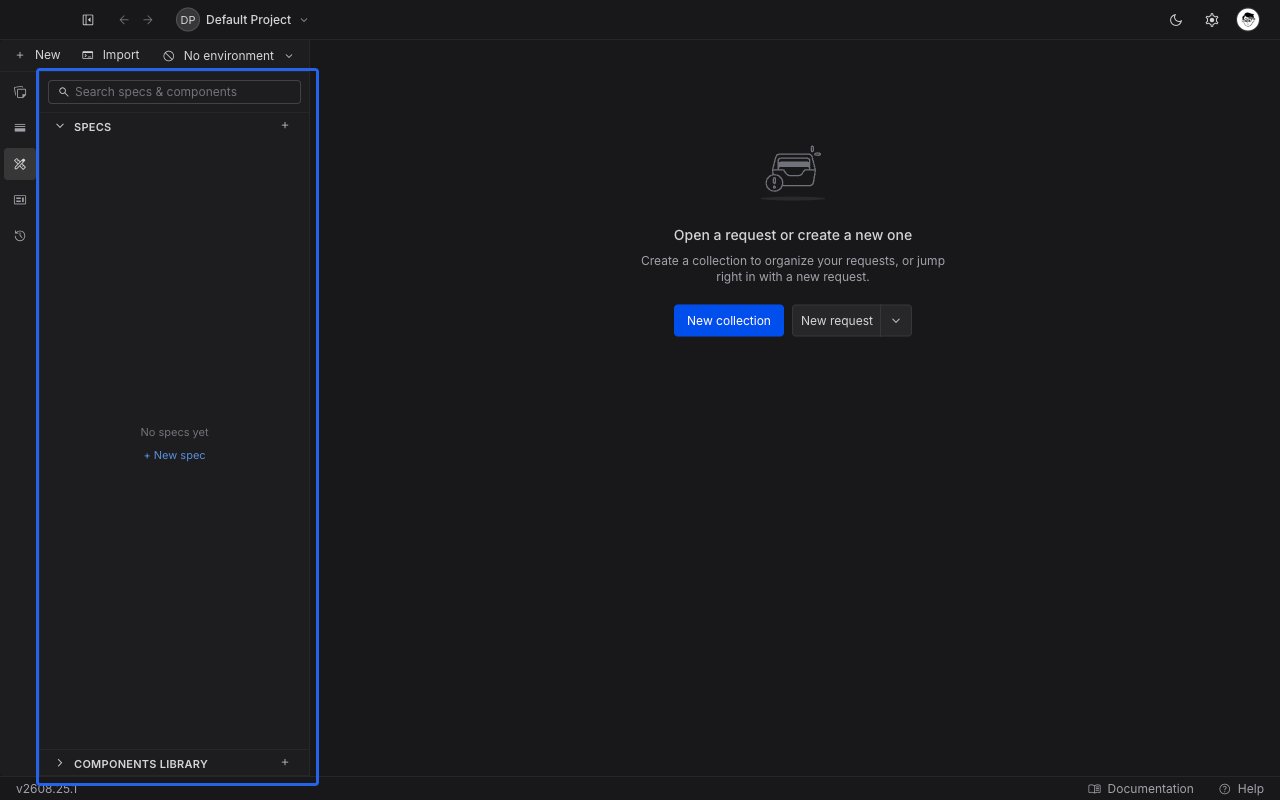
The panel has two sections, a search box across the top, and a+ button on each section header.
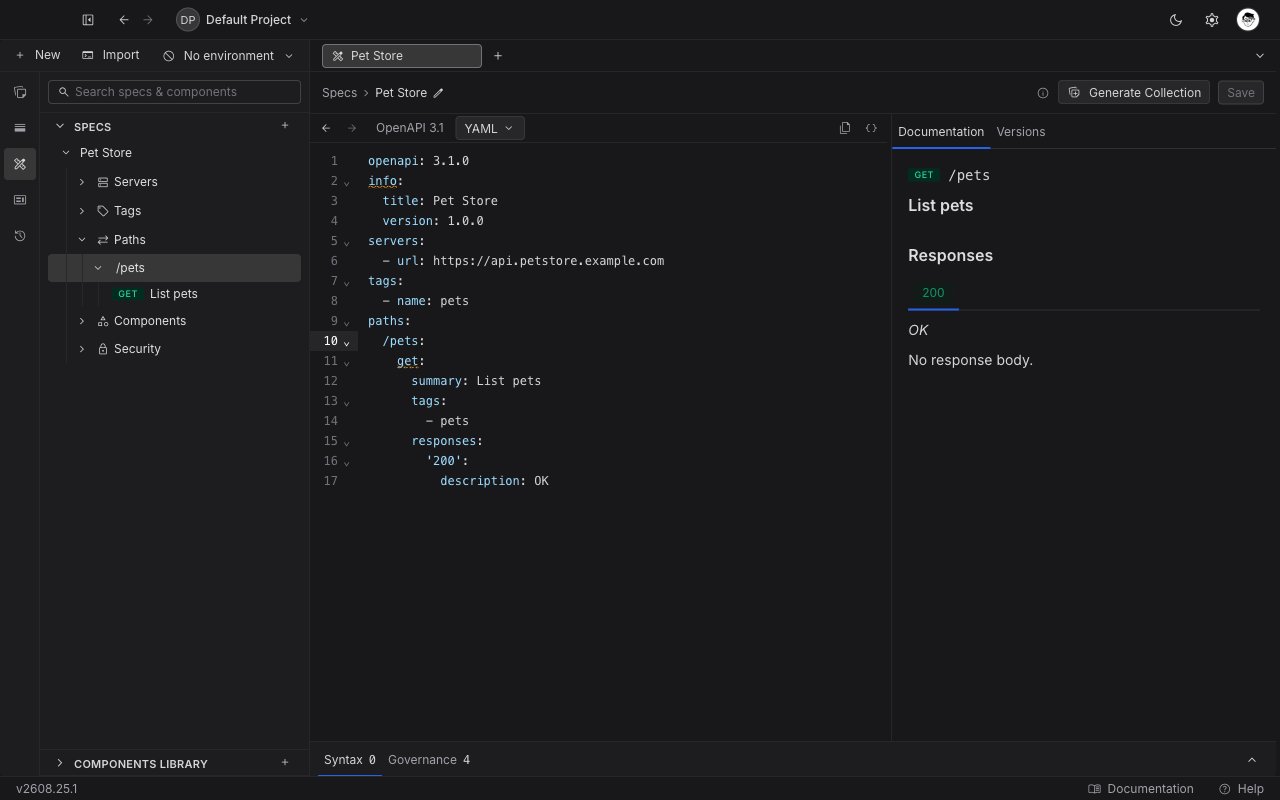
- Specs lists every specification in the project. Expand one and you get its outline: Servers, Tags, Paths, Components, and Security. Paths expand into their operations, each with its method badge. Clicking an entry inside a bucket jumps the editor to that line. Security stays empty for now even when your document declares security requirements.
- Components Library lists the project’s reusable pieces, grouped by category. It starts collapsed, because most of the time you are working in a document rather than browsing the library. Click the header to open it.
Create your first specification
1
Open the Specs section
Click the API Design icon in the API Client sidebar. If the project has no specifications yet, the Specs section shows “No specs yet” with a New spec button.
2
Pick an OpenAPI version
Click New spec (or the 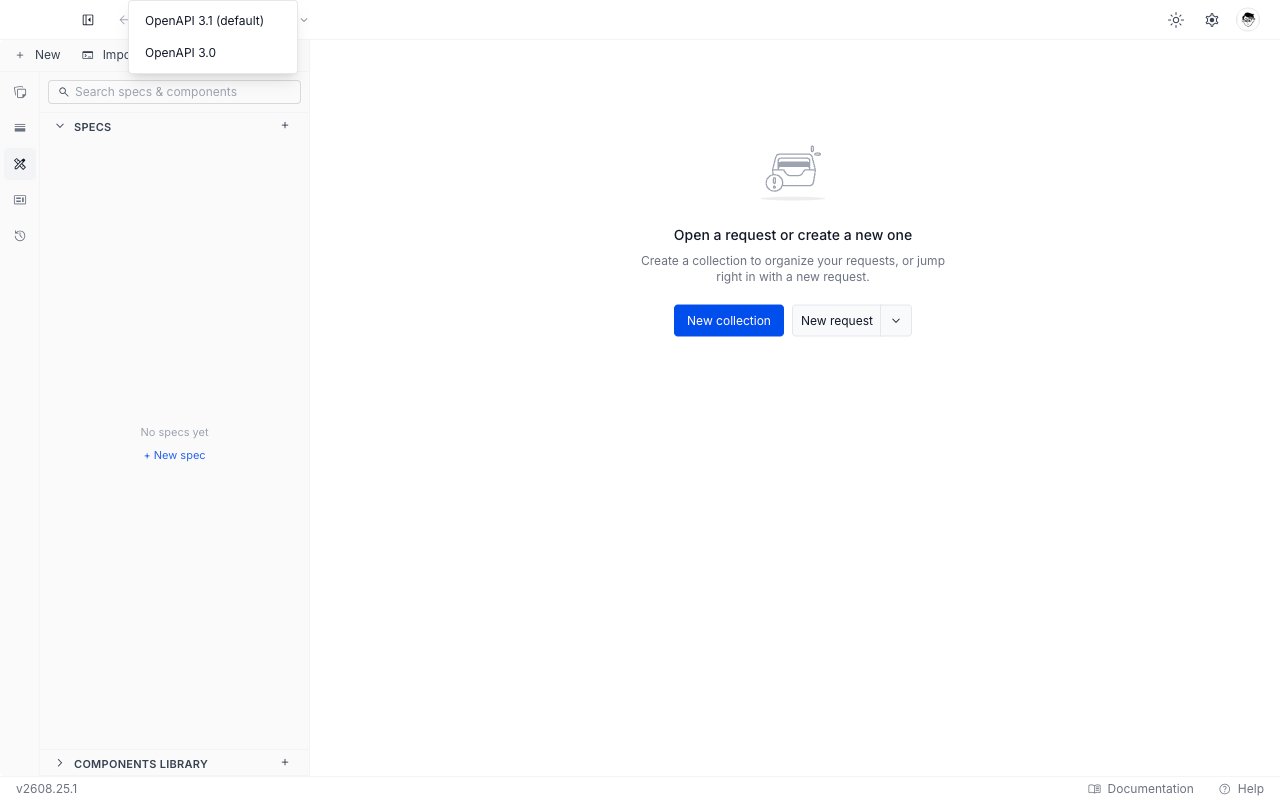
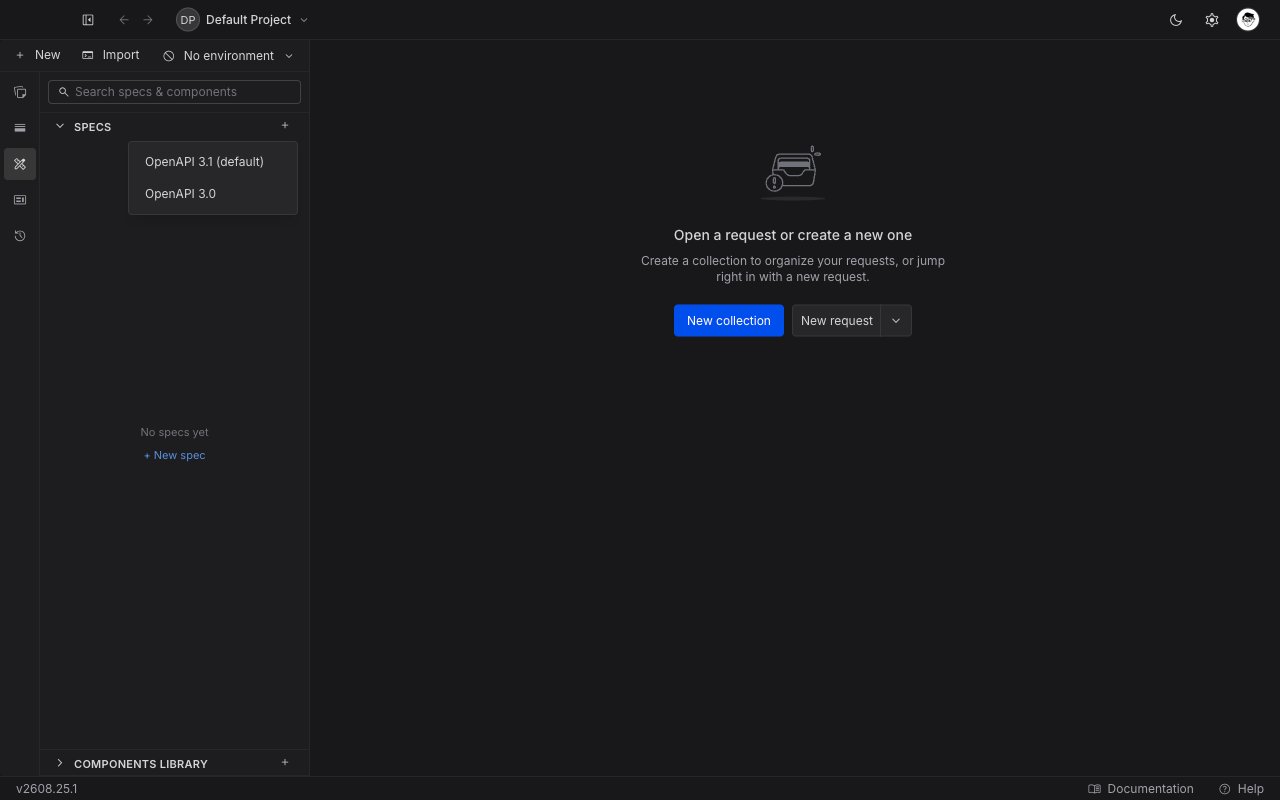
+ on the Specs header) and choose OpenAPI 3.1 (default) or OpenAPI 3.0. The same choice is available from + New → API spec in the sidebar toolbar.3
Name it
The specification opens in a new tab as a draft, seeded with a minimal valid document, and the name in the breadcrumb is focused. Type a name and press Enter.
4
Save
Press
Cmd/Ctrl + S or click Save. Nothing is written to the project until you save, so a draft you abandon leaves nothing behind.What you can do with a specification
Once a specification exists, the rest of API Design hangs off it.- Read it as documentation. The rail beside the editor renders the document as you type: operations, parameters, request and response bodies, and schema trees.
- Keep it clean. Problems are flagged inline in the editor and collected in an Issues panel, with a governance ruleset you can tune per project. See issues and governance.
- Turn it into requests. Generate a collection from the specification and keep the two in step as the document changes. See sync a collection from a specification.
- Cut a version. Freeze the current document as a named release you can come back to. See versions and releases.
- Publish it for other people to read. Put a released version on a shareable URL, with public, internal or password access. See publish API documentation.