

Prerequisites
- You are signed in and a cloud project is active. Generation is not available in local projects, and the menu item does not appear there.
- Your role has permission to create mocks in the project. Without it the menu item is visible but disabled.
- The collection contains at least one HTTP request with at least one saved example. Requests without examples still become routes, but those routes have nothing to serve.
Generate the mock
1
Right-click the collection
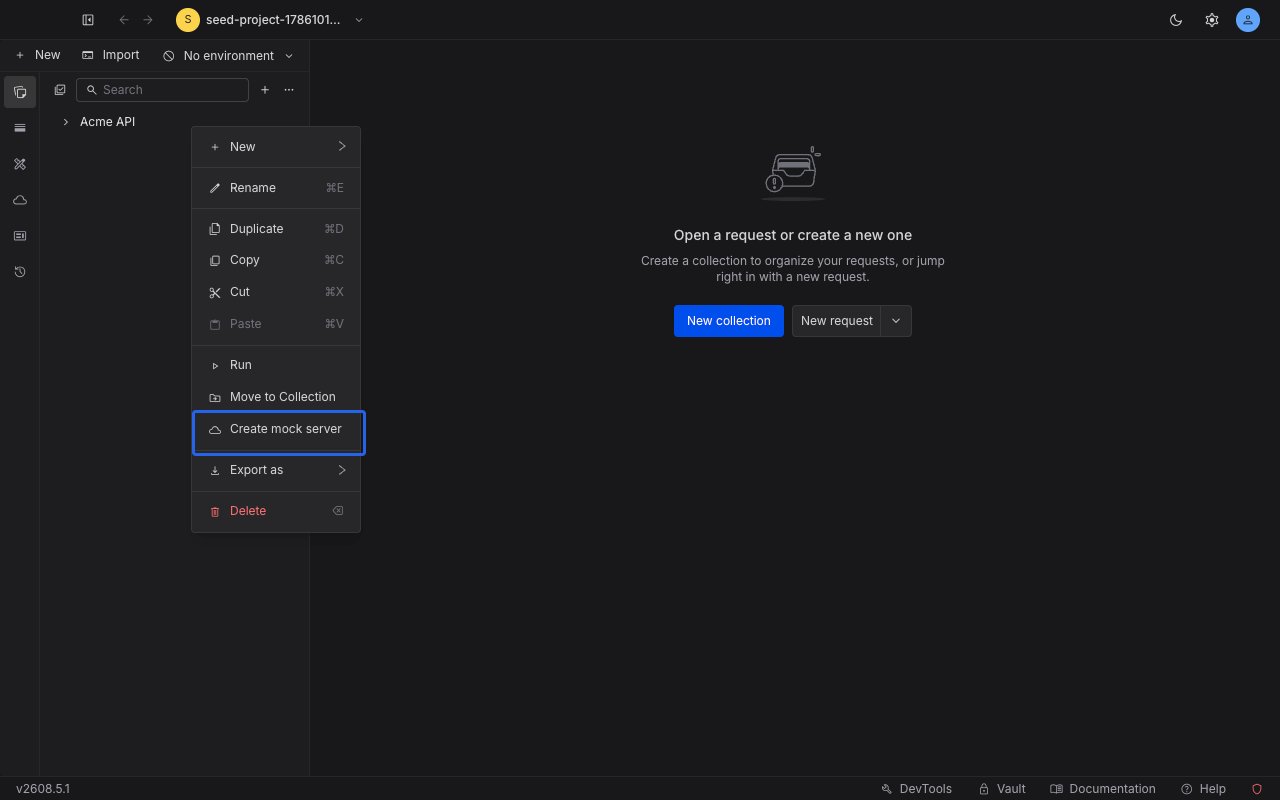
In the Collections section of the sidebar, right-click the collection or sub-collection you want to mock and choose Create mock server. Sub-collections work the same way as top-level collections, and everything nested beneath the one you pick is included. The item appears only on collections and sub-collections: requests and examples have their own menus and cannot be mocked on their own.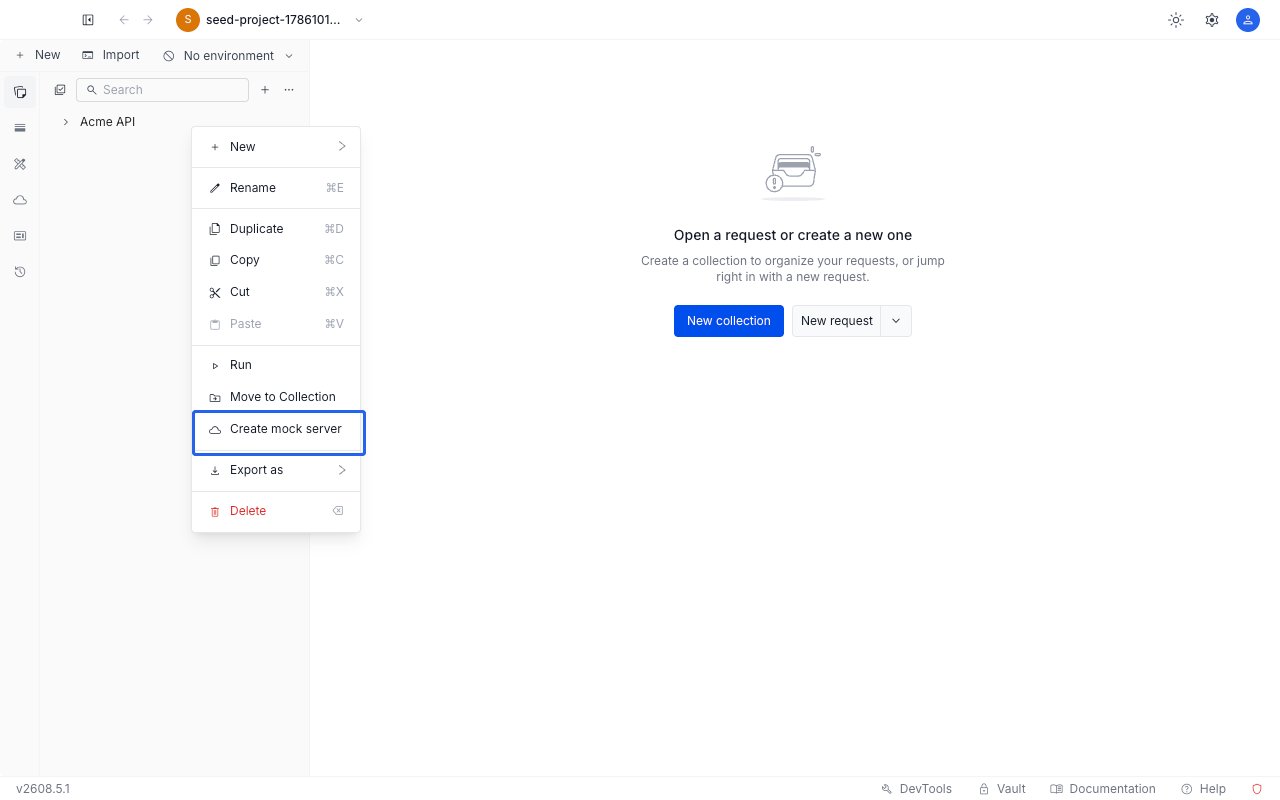
2
Name the mock
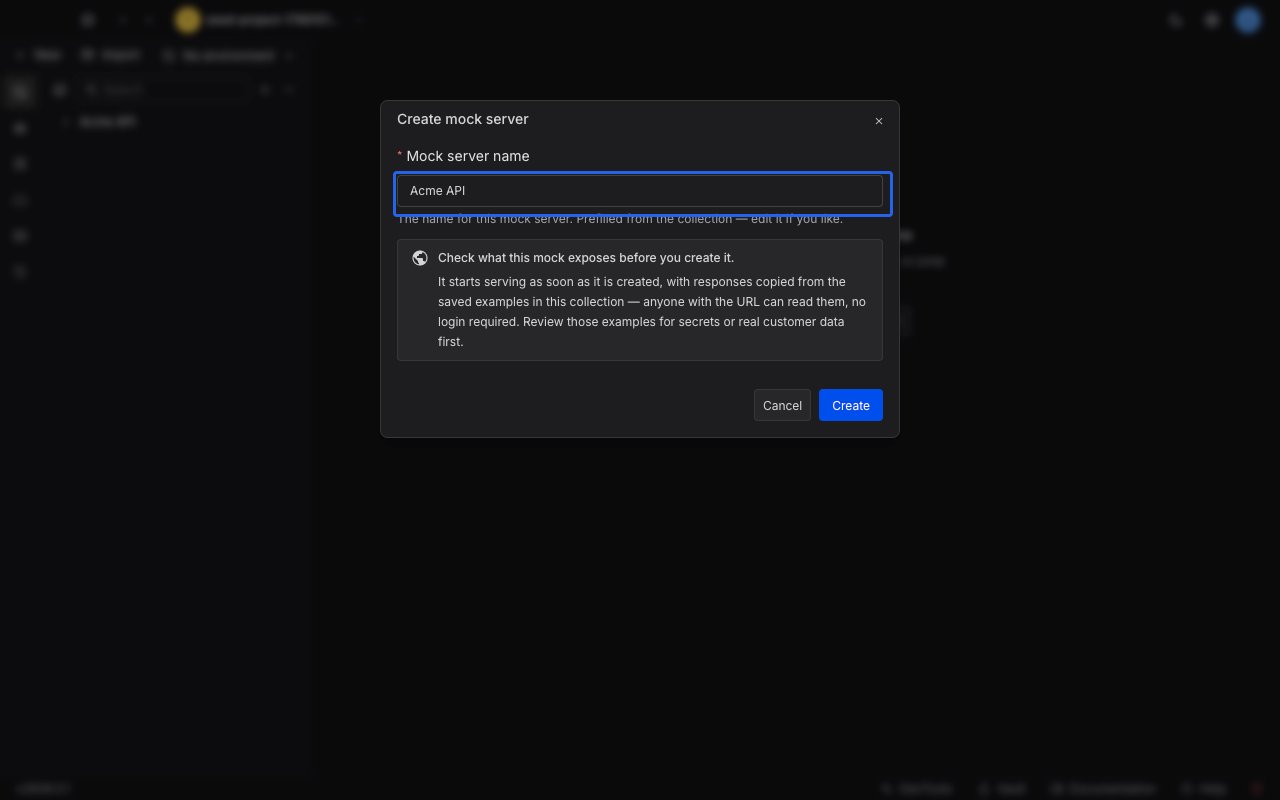
The Create mock server dialog opens with the name already filled in from the collection you right-clicked. Keep it or type your own. The name is required, so clearing it disables Create.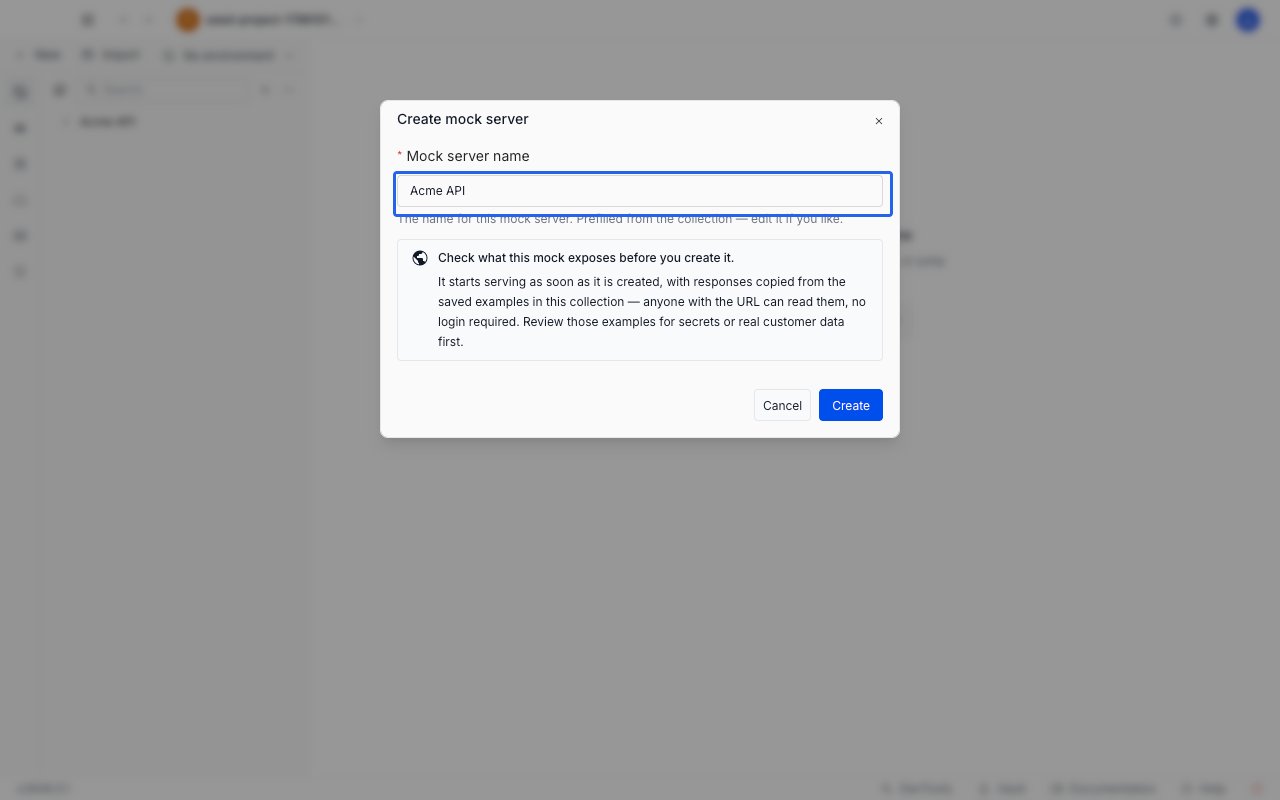
3
Create
Click Create. Requestly reads the collection, builds the routes and responses, and writes them in one go. The dialog stays open and cannot be dismissed while this runs.
4
Review the summary
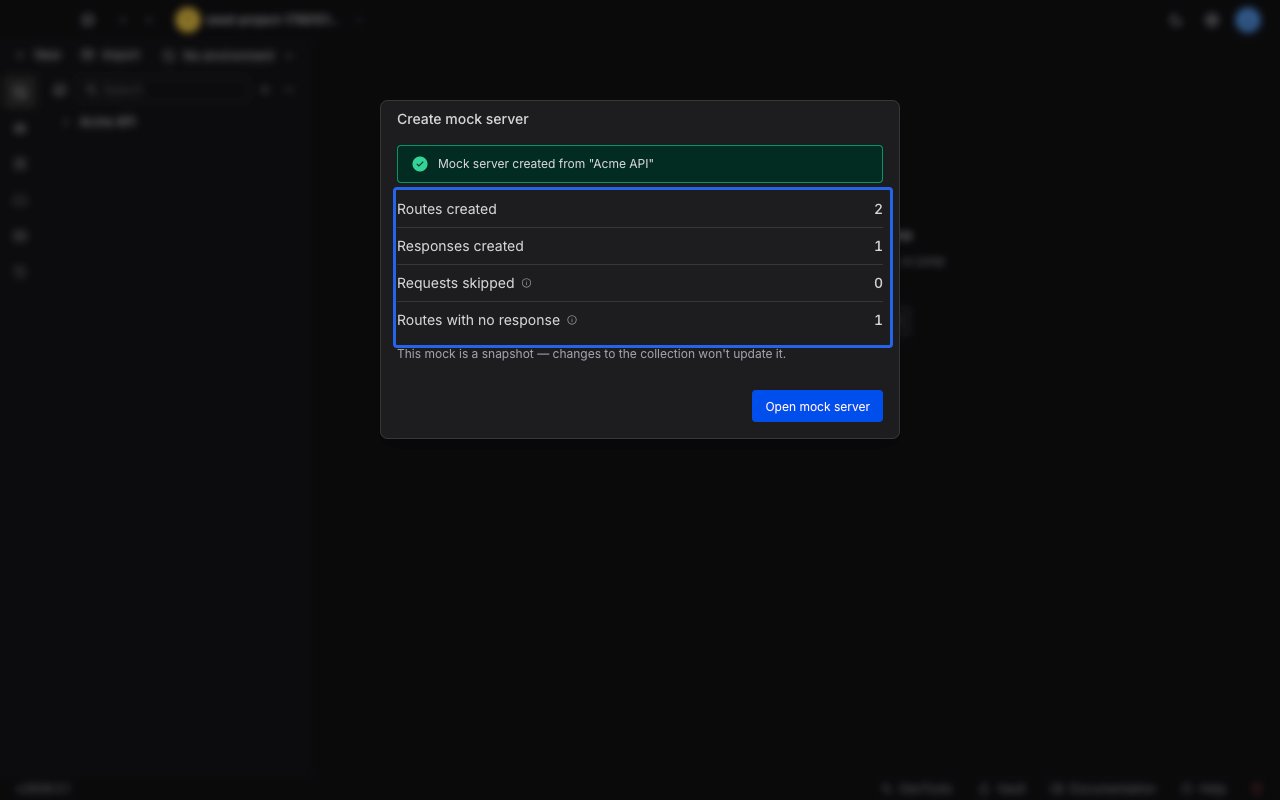
When generation finishes, the dialog reports what it produced: how many routes and responses were created, and any rows where something was skipped, dropped, or changed. See Read the generation summary for what each row means.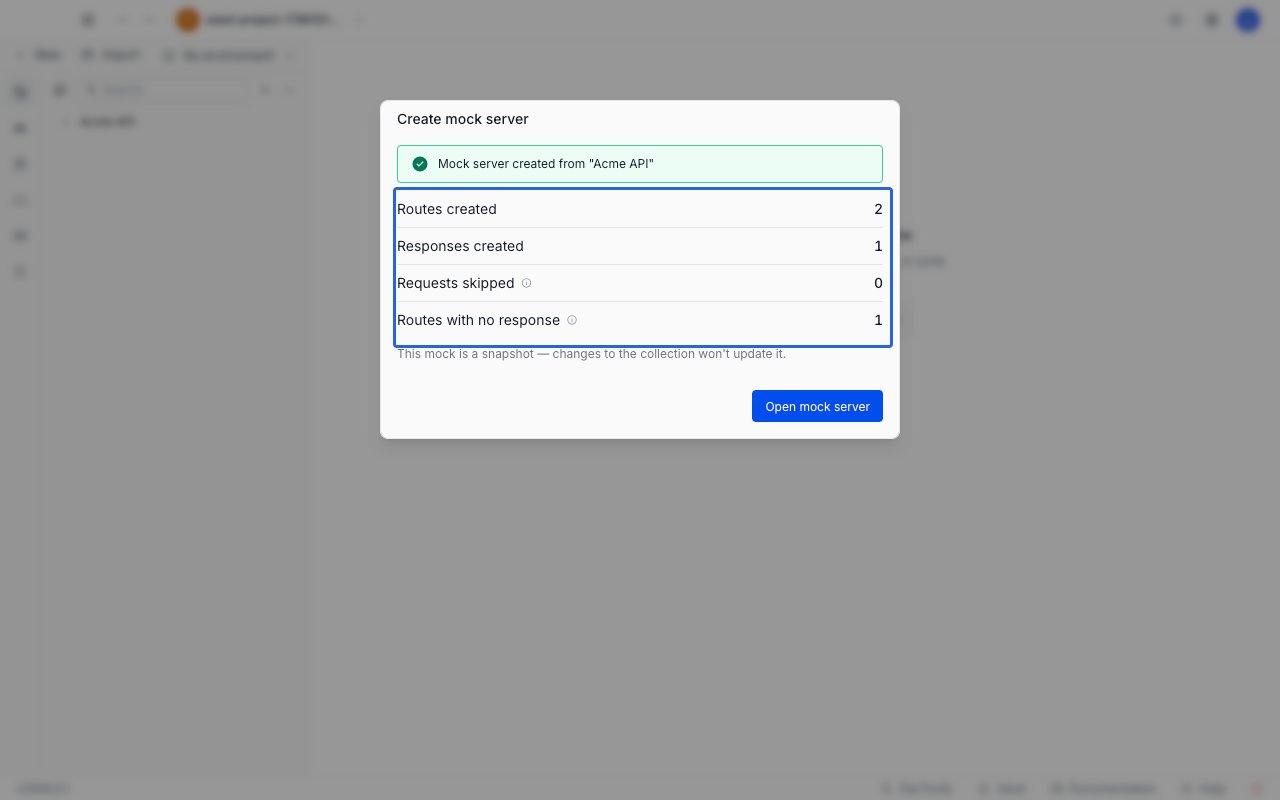
5
Open the mock and call it
Click Open mock server. This is the only way out of the dialog, because the mock already exists and there is no Close button. The mock opens in an editor tab, already serving. Copy the mock URL from the strip at the top, append a route path, and call it:You get back the saved example response that the route was built from.
What gets generated
Every generated route is set to the Rules-based selection mode, and one of its responses is marked as the default: the first successful (
2xx) example, or the first example if none succeeded. A route with several examples therefore serves the default until you add matching rules to pick between them.
Transport headers such as content-length, content-encoding, and date are not copied across, because the mock sets its own. content-type and your own custom headers are preserved. set-cookie is dropped as well, along with the other hop-by-hop headers, so a generated route never sets a cookie.
A generated mock is a snapshot. Editing the collection afterwards does not update the mock, and editing the mock does not touch the collection.
Read the generation summary
The first three rows always appear, so a zero tells you nothing was quietly dropped. The rest appear only when they are non-zero. Most rows carry an information icon; hover or tab to it for the same explanation in the app. Routes created and Responses created have none, and neither does Responses dropped, because the reason differs from one response to the next.After the mock is created
Unlike a mock you create from scratch, a generated mock is already running, so the URL strip offers Stop rather than Start. Click the copy icon at the end of the strip to copy the base URL. From here the mock behaves like any other:- Add, reorder, and delete routes.
- Edit the body, status, latency, and headers of each response.
- Add matching rules so one route can answer differently depending on the request.
404 until you give them something to serve.
When generation cannot run
If the collection or the request is rejected, the dialog explains why and stays open so you can act on it. When the failure is transient, such as the server rejecting the request or being unreachable, nothing was created and the dialog offers Try again.Generation is all or nothing on every failure except a timeout. Nothing partial is left behind for you to clean up.